
Bluesound Hub
Turns any wired audio source — turntable, CD player, TV — into a BluOS network source, with five inputs including a proper MM phono stage. Stream one analogue and one digital source simultaneously to different rooms.
Usually dispatched in 1-2 days. Delivery & returns
£309.00
including delivery and VAT
Have a question? Call us on 0161 399 0993 or contact us. We also offer part exchange and price matching.


About the Bluesound Hub
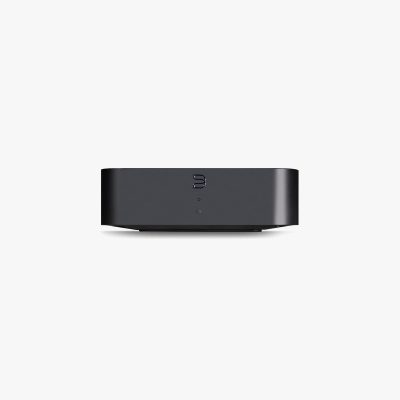
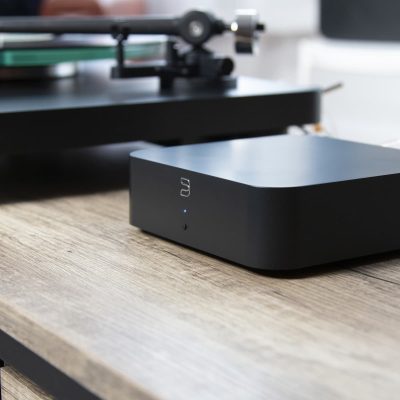
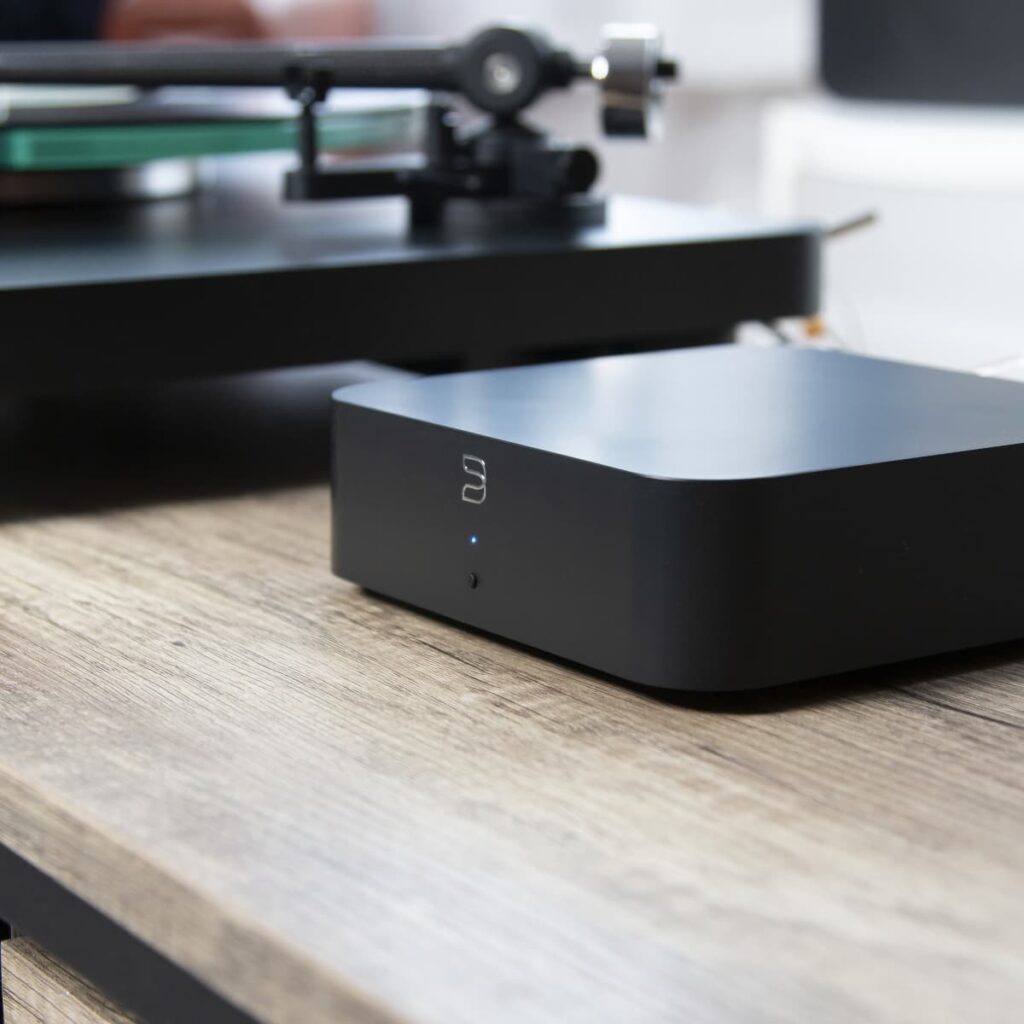
A turntable, a CD player, a TV — plenty of gear you own doesn’t have a network connection of its own, and even if you plugged it into a Bluesound player’s own analogue or digital input, that source would still be stuck in whichever room that player sits in. The Hub’s job is to put a wired source onto your BluOS network directly, so any Bluesound player in the house can pick it up wirelessly — not just the one it’s physically plugged into.
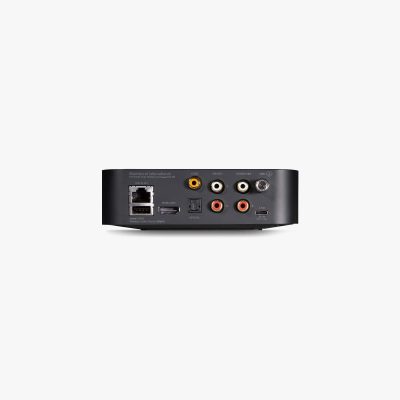
It does this across five inputs at once: HDMI eARC, coaxial digital, TOSLINK optical, stereo RCA line level, and a moving magnet phono input. Two of those can be active simultaneously — one analogue source and one digital source, each streamed independently to different players. That’s not input-switching, it’s two genuinely separate signal paths running from the same box.
The phono stage is doing real work
A turntable’s cartridge signal is tiny and needs RIAA equalisation before it’s usable — that’s what a phono stage is for, and it’s easy to forget a HUB needs one built in if you’re feeding vinyl into it. Bluesound have built a low-noise, wide-bandwidth MM phono stage directly into the Hub, rated above 80dB signal-to-noise, so a turntable’s cartridge output arrives at the BluOS network already amplified and equalised — no separate outboard phono stage required.
Worth flagging: this is a moving magnet input only. If you’re running a moving coil cartridge, you’ll still need a step-up transformer or head amp ahead of the Hub — get in touch if you’d like advice on matching one to your cartridge.
Connectivity and control
The Hub connects to your network over dual-band Wi-Fi or Gigabit ethernet, and up to four Hubs can run on a single network at once — useful if you’ve got several wired sources scattered around a larger system. Everything is selected and controlled from the BluOS app, so switching which source feeds which room is a few taps rather than a trip to the equipment rack.
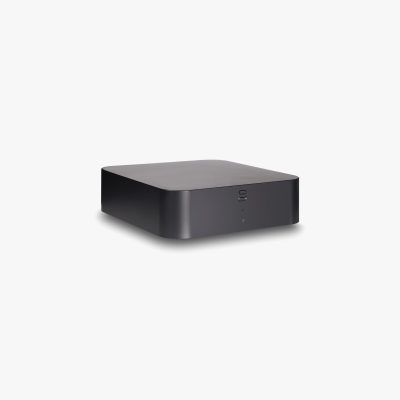
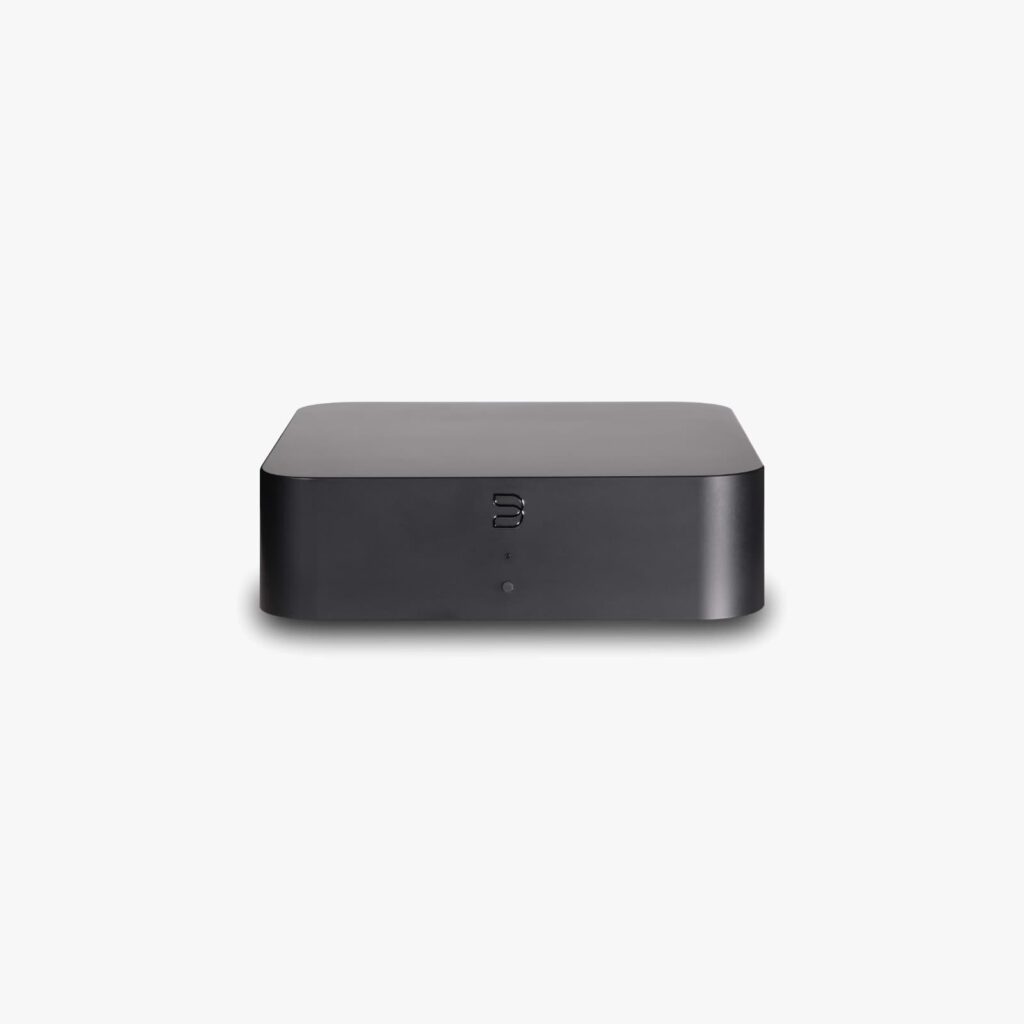
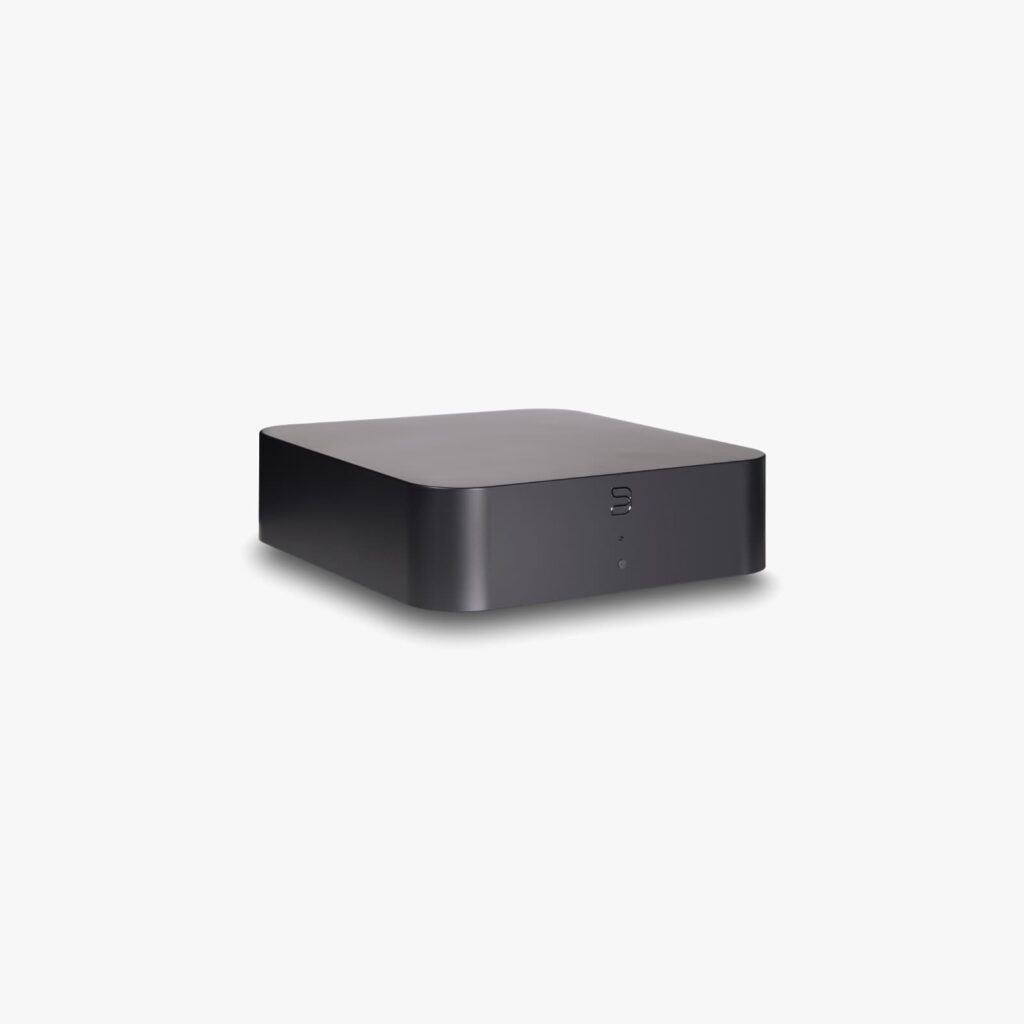
Power comes from an external USB-C adapter rather than an internal supply, which is why the unit itself stays small enough to tuck out of sight behind a TV or turntable.
Features
- Five inputs, two simultaneous streams — HDMI eARC, coaxial, optical, stereo RCA, and MM phono, with one analogue and one digital source streamable at once
- Built-in MM phono stage — low-noise, wide-bandwidth design (>80dB S/N) for whole-home turntable streaming without an outboard phono stage
- HDMI eARC for TV sound — pair with a set of Bluesound Pulse speakers to get multi-room audio from your TV
- Dual-band Wi-Fi or Gigabit ethernet — flexible network connection depending on where the Hub sits
- Up to 4 Hubs per network — support for multiple wired sources across a larger system
- BluOS app control — select any Hub input as the source for any BluOS player from your phone or tablet
- Compact, external power supply — external USB-C adapter keeps the unit small enough to place discreetly
Frequently Asked Questions
Do I still need a separate phono stage for my turntable?
No — the Hub has a moving magnet phono stage built in, so a turntable with an MM cartridge can connect directly. If you’re running a moving coil cartridge, you’ll need a step-up transformer or head amp ahead of the Hub, since its phono input is MM only.
Can I use two sources at the same time?
Yes — one analogue source (line or phono) and one digital source (HDMI, coaxial, or optical) can stream simultaneously, to different BluOS players if you like.
Will this work with speakers I already own?
The Hub’s output is network-only — it needs a BluOS-compatible player, amplifier, or powered speaker downstream to actually produce sound. It won’t connect directly to a standard passive speaker or amplifier without a BluOS player somewhere in the chain.
Can I use it to add multi-room sound to my TV, turntable or other source?
Yes — connect your TV via HDMI eARC, and the Hub can stream that audio to Bluesound players elsewhere in the house, such as a pair of Pulse speakers.
How many Hubs can I run on one network?
Up to four, giving up to eight simultaneous streams across a larger system.
Does it need Wi-Fi, or can I use a cable?
Either — dual-band Wi-Fi 5 or wired Gigabit ethernet, whichever suits where you’re placing it.
Specifications
| Brand | Bluesound |
| Operating System | BluOS |
| Simultaneous Audio Streams | 2 per Hub (1 analogue + 1 digital) |
| Native Sampling Rates | Up to 192kHz |
| Bit Depth | 16–24 bit |
| Signal-to-Noise Ratio | >100dB (line input), >80dB (phono MM input) |
| Distortion | <0.03% (20Hz–20kHz, -1dBFS output) |
| Frequency Response | 20Hz–20kHz ±0.3dB; 50kHz -3dB |
| Maximum Units | 4x Hub on a single network (8 simultaneous streams) |
| Analogue Line Input | 1x Stereo RCA |
| Phono Input | 1x Stereo RCA (Moving Magnet) |
| Optical Input | 1x TOSLINK digital optical |
| Coaxial Input | 1x RCA (75 ohms) |
| HDMI Input | HDMI eARC with CEC |
| USB Input | Type A (firmware upgrade only) |
| Audio Output | Network (BluOS) |
| Wi-Fi | Wi-Fi 5 (802.11ac), 2.4/5GHz |
| Ethernet/LAN | RJ45, Gigabit (1000 Mbps) |
| Power Supply | External USB-C adapter (100–240V AC in, 5V/2A out) |
| Power Consumption | 0.5W network standby |
| Processor | ARM Cortex-A53, Quad-Core, 1.8GHz per core |
| Control System Integration | Control4, Crestron, URC, RTI, ELAN, Lutron (via firmware update) |
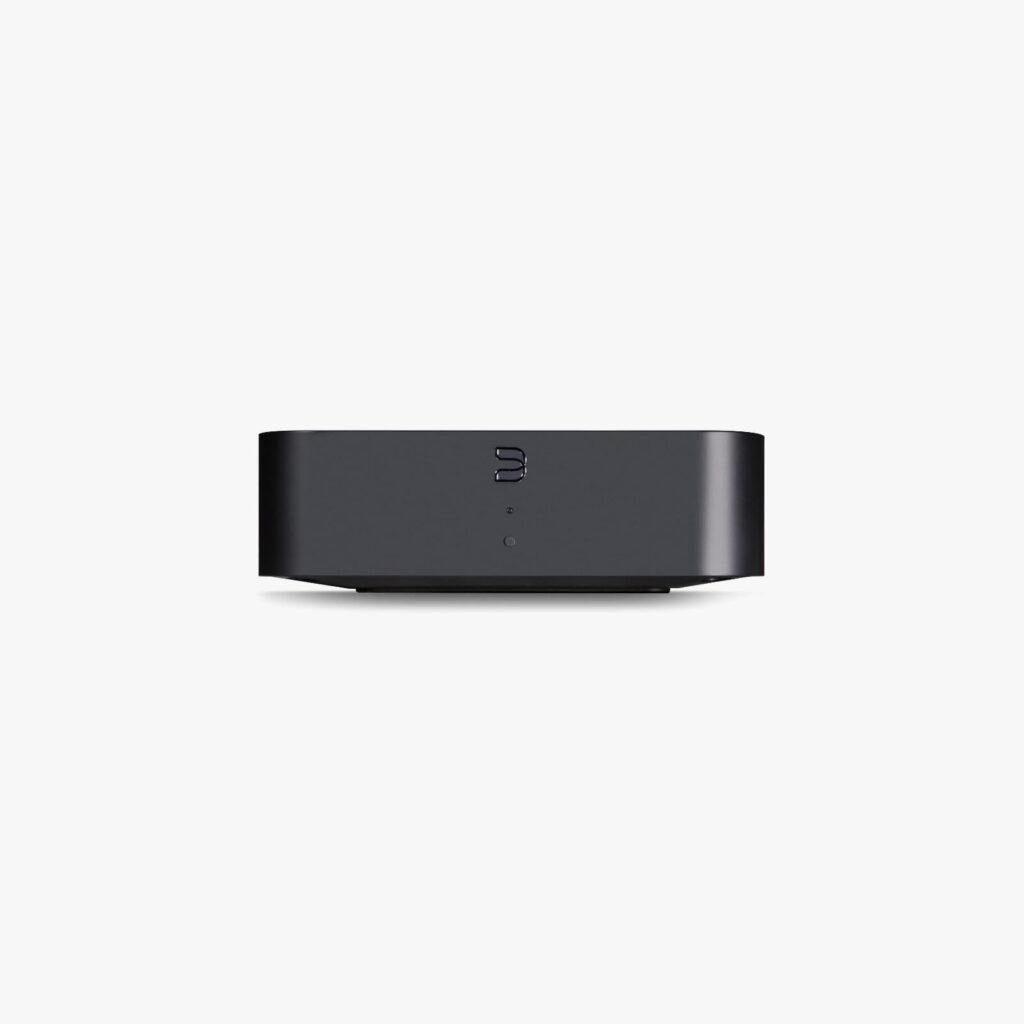
| Finish | Black, matte satin paint |
| Dimensions (W x D x H) | 143 x 153 x 45mm |
| Weight | 0.63kg |
| BluOS Controller Compatibility | iOS, Android, Windows, macOS |