
Hegel P30A Reference Preamplifier
Hegel’s reference preamplifier. Hand-matched transistors, a fully balanced circuit and SoundEngine 2 technology – built to pass music through with absolute fidelity.
Usually dispatched in 2-3 days. Delivery & returns
£7,000.00
including delivery and VAT
We’re an authorised Hegel dealer. In line with Hegel’s terms, this model is available to order for collection from Stockport, by appointment. For delivery, or if you’d like to talk through your options first, call 0161 399 0993 or contact us.
We also offer part exchange and price matching.

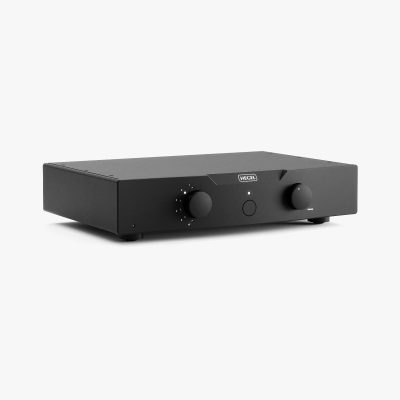
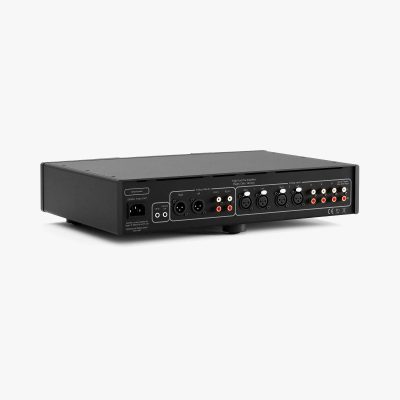
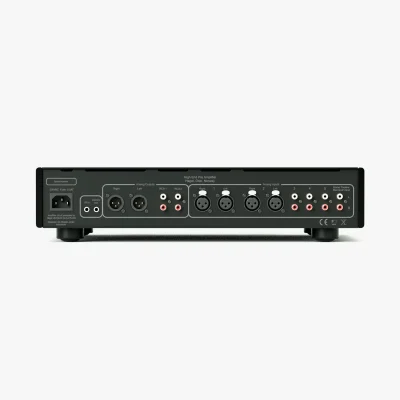
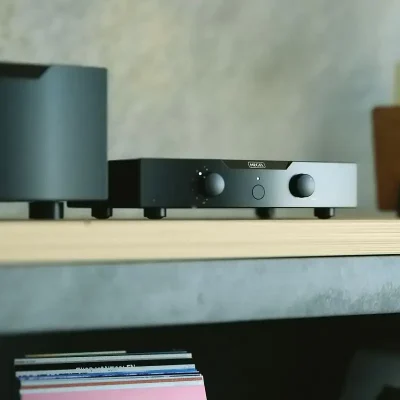


About the Hegel P30A
The preamplifier at the heart of Hegel’s reference system
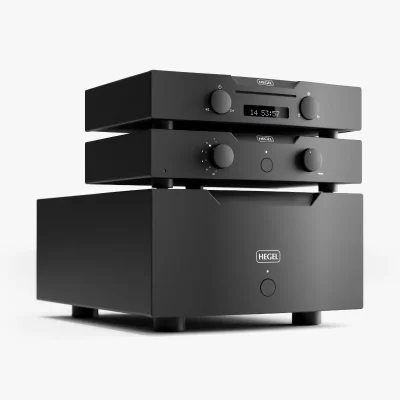
The P30A sits at the top of the Hegel range, alongside the H30A power amplifier, the Viking CD player and the D50 DAC. Hegel calls the P30A “The Conductor” and the name is deliberate. A great conductor doesn’t impose their personality on the music. They bring precision, control and deep understanding to every performance, and then step back and let the musicians play.
That is exactly what the P30A does. Its job is to take the signal from your source, whether that is the Viking CD Player, the D50 DAC, or any other component, and pass it through to the H30A power amplifier with absolute fidelity. Hegel designed the P30A and H30A to work together – “The Conductor” and “The Orchestra”. Together they represent the full expression of Hegel’s reference amplifier technology.
The P30A achieves this through single pair FET transistors, a dead quiet volume control, very short signal paths, and SoundEngine technology. Nothing is added, and nothing is taken away.

Transistors selected by hand
Most manufacturers accept that transistors will vary slightly within a batch. For most applications, those variations are within acceptable limits. For the P30A, they are not.
Hegel uses single-pair FET transistors that produce no higher-order harmonic distortion. But even within a carefully selected type, individual transistors will measure differently from one another. Bent Holter, Hegel’s founder and chief engineer, measures each transistor personally and matches those with exactly the same values. Only perfectly matched pairs make it into the P30A.
The result is a preamplifier that sounds exceptionally smooth and natural, not because anything has been softened or rounded off, but because the distortions that normally colour the sound simply aren’t there.
The shortest path from source to amplifier
Once the transistors are matched, the signal path through the P30A is kept as short as physically possible. The internal layout is designed to minimise signal path lengths, reducing the opportunity for electrical interference to corrupt the signal. External connections – the number of sockets, connectors and circuit board traces the signal must pass through – are kept to an absolute minimum.
In practice, the music signal passes through just two transistors and a dead quiet volume attenuator before reaching the output. That is an exceptionally direct path for a preamplifier. The signal-to-noise ratio of greater than 130 dB in balanced mode and crosstalk of less than -100 dB are the measurable results, but the audible result is a preamplifier that retrieves detail and low-level information with unusual clarity.
The P30A also uses Hegel’s patented SoundEngine 2 technology. SoundEngine 2 identifies distortion in real time and corrects it before it can propagate further. Intermodulation distortion – one of the most audibly damaging forms – is actively eliminated as the signal passes through.
Fully balanced from input to output
The P30A is fully balanced throughout. This is not simply a matter of providing balanced XLR connectors – the entire circuit is dual-differential, meaning there are two completely separate amplifiers, two volume controls, and two SoundEngine 2 modules per channel.
The advantage of a fully balanced design is that common-mode noise – interference that affects both signal paths equally – is cancelled out at every stage. Any distortion that survives the matched transistors and the SoundEngine 2 correction is largely eliminated by the balanced topology. What remains is a signal that is as close to the original source material as it is technically possible to achieve.
Versatile connectivity and complete control
The P30A offers two balanced XLR inputs and three unbalanced RCA inputs, giving you flexibility to connect both balanced and single-ended sources simultaneously. A fixed-level AV input allows seamless integration into a home theatre system, or it can be reconfigured as a standard input if preferred.
On the output side, one balanced XLR and two unbalanced RCA outputs are all active at the same time, so you can drive multiple power amplifiers or recording devices without switching. One of the RCA outputs can be configured as a fixed-volume output for recording.
The included RC8 remote control handles volume, input selection and mute – the functions you reach for most often. It also controls play, pause, skip and stop on Hegel CD players and most media players, and includes a dedicated DAC+ button for switching to Hegel DAC inputs directly.
A 3.5mm IR direct input is provided for integration with Crestron, Control4 and other third-party control systems. A 12V trigger output allows the P30A to power up and down connected amplifiers automatically.
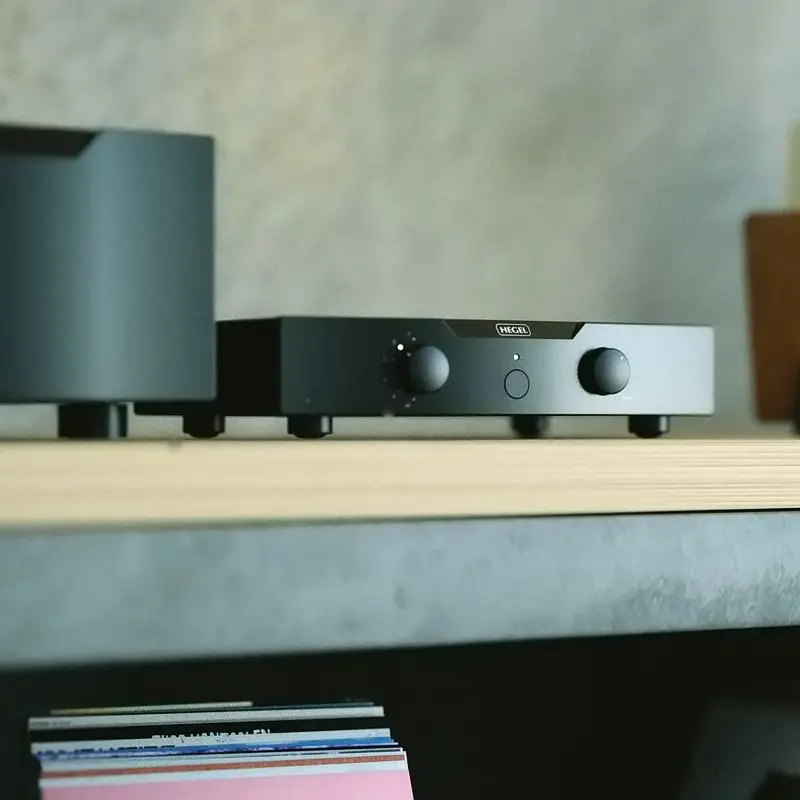
Features
Signal integrity
Hand-matched FET transistors
Bent Holter personally measures and matches every transistor pair — only those with identical values make it in.
Two-transistor signal path
The music signal passes through just two transistors and a dead quiet volume attenuator.
Fully balanced throughout
Two separate amplifiers, volume controls and SoundEngine 2 modules per channel — common-mode noise cancelled at every stage.
>130 dB signal-to-noise ratio in balanced mode
One of the highest figures achieved in any preamplifier at any price. Crosstalk less than -100 dB.
Technology
SoundEngine 2
Patented feed-forward error correction that cancels distortion in real time.
Intermodulation distortion correction
Actively identified and corrected in real time. Measured at less than 0.01% (19 kHz + 20 kHz).
Connectivity
2 x balanced XLR inputs
For connecting balanced sources such as the Hegel D50 DAC, Hegel V10 phono stage or other balanced components.
3 x unbalanced RCA inputs
For single-ended sources. All five inputs can be connected simultaneously and switched via the front panel or RC8 remote.
Home theatre bypass
Fixed-level input for home theatre integration — configurable as a standard input if preferred.
Active simultaneous outputs
One balanced XLR and two RCA outputs, all active simultaneously. One RCA configurable as fixed-volume.
12V trigger output
Powers connected amplifiers up and down in sync with the P30A — including the Hegel H30A.
Control
RC8 remote control
Controls volume, input and mute on the P30A — and play, pause and skip on Hegel CD players and most media players.
IR direct input
3.5mm input for integration with Crestron, Control4 and other third-party control systems.
Front panel controls
Volume and source selection knobs with display showing input and volume level.
Specifications
| Brand | Hegel |
|---|---|
| Colour | Black |
| Analogue Inputs | 2 x balanced XLR, 3 x RCA |
| Analogue Outputs | 1 x balanced XLR, 2 x RCA |
| Signal-to-Noise Ratio | >130 dB in balanced mode |
| Crosstalk | <100 dB |
| Distortion | <0.005% |
| Intermodulation | <0.01% (19 kHz + 20 kHz) |
| Dimensions (W x D x H) | 430 x 300 x 96 mm |
| Weight | 7.2 kg |
Downloads
Frequently Asked Questions
Does the Hegel P30A need to be used with the H30A, or can it be paired with other power amplifiers?
The P30A works with any power amplifier that accepts a standard balanced XLR or unbalanced RCA input – it is not limited to Hegel amplifiers. That said, it was designed alongside the H30A and the two share a common design philosophy, so they work particularly well together. If you are building a reference system from the ground up, the H30A is the natural partner. If you are upgrading an existing system incrementally, the P30A will work with whatever power amplifier you currently have.
What is the advantage of a fully balanced preamplifier over a single-ended design?
A fully balanced design runs two separate signal paths per channel – one carrying the positive phase of the signal, one carrying the negative. Any noise or interference that affects both paths equally is cancelled out when the two are combined at the output. This common-mode rejection is particularly effective at eliminating the low-level hum and interference that can degrade the performance of sensitive preamplifier circuits. In the P30A, the fully balanced topology also means two complete SoundEngine 2 correction circuits per channel, which doubles the distortion correction available compared to a single-ended design.
Can the P30A be integrated into a home theatre system?
Yes. The P30A includes an AV input that operates at a fixed volume level, allowing it to be driven directly by a home theatre processor without the processor’s volume control interacting with the P30A’s own volume attenuator. The AV input can also be reconfigured as a standard input if you do not need this function.
Does the P30A support balanced connections throughout the signal chain?
Yes. The P30A is fully balanced from input to output. When used with a balanced source such as the D50 DAC and a balanced power amplifier such as the H30A, the signal remains balanced throughout – maximising the common-mode rejection and distortion cancellation benefits.
Is the P30A compatible with third-party control systems like Crestron or Control4?
Yes. The P30A includes a 3.5mm IR direct input for integration with third-party control systems including Crestron, Control4 and similar. It also has a 12V trigger output that can be used to power connected amplifiers up and down automatically.
How long does the P30A take to reach its best performance after switching on?
Like all Hegel amplifiers, the P30A sounds its best after approximately 15 minutes of warming up at moderate volume. During this period the internal components reach their optimal operating temperature and the sound opens up noticeably.
What warranty does the P30A come with?
The Hegel P30A carries a two-year manufacturer’s warranty against defective materials and workmanship. As an authorised Hegel dealer, we provide full UK warranty support.
Can I trade in my existing preamplifier against the P30A?
Yes. We offer part exchange on orders over £1,000. We will give you a trade-in quote based on the make, model and condition of your existing preamplifier or other equipment. We will do our best to make the upgrade as straightforward as possible.