Hegel Integrated Amplifiers
Hegel’s integrated amplifiers are built around a single conviction: that the best way to hear your music is through electronics that get out of the way. Amplification, DAC and streaming in one carefully engineered chassis – the perfect one box hi-fi system.
Designed and engineered in Oslo, every Hegel integrated amplifier uses SoundEngine 2, delivering exceptionally low distortion and a damping factor of up to 4,000. The Hegel range includes six integrated amplifiers, from the H95 at the entry point to the H600 at the flagship level, each sharing the same engineering philosophy but scaled in power, connectivity and streaming capability. Whether you are building a system around a single component or looking to upgrade a specific part of the chain, our full model comparison table gives a detailed breakdown of inputs, outputs and features across the range. We are an authorised Hegel dealer and are happy to help you choose the right model for your system and room.
The current Hegel integrated amplifier range
Hegel H95
The starting point in the range, and the most affordable option if your room is modest or your speakers are reasonably efficient. 60 watts sounds unremarkable on paper next to the rest of the range, but Hegel’s high-current design and a damping factor of 2,000 give it a grip most 60-watt amplifiers don’t have. Streaming comes as standard, though pared back compared to the other streaming models – see the full platform breakdown below for what’s included. You’ll need a separate phono stage if vinyl is part of your system.
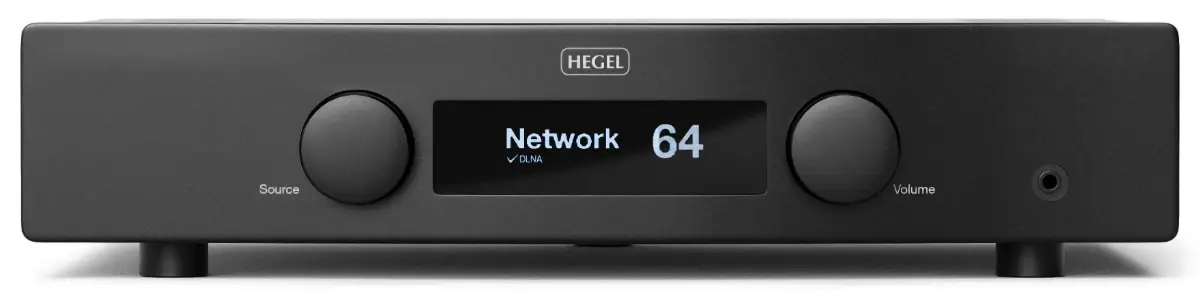
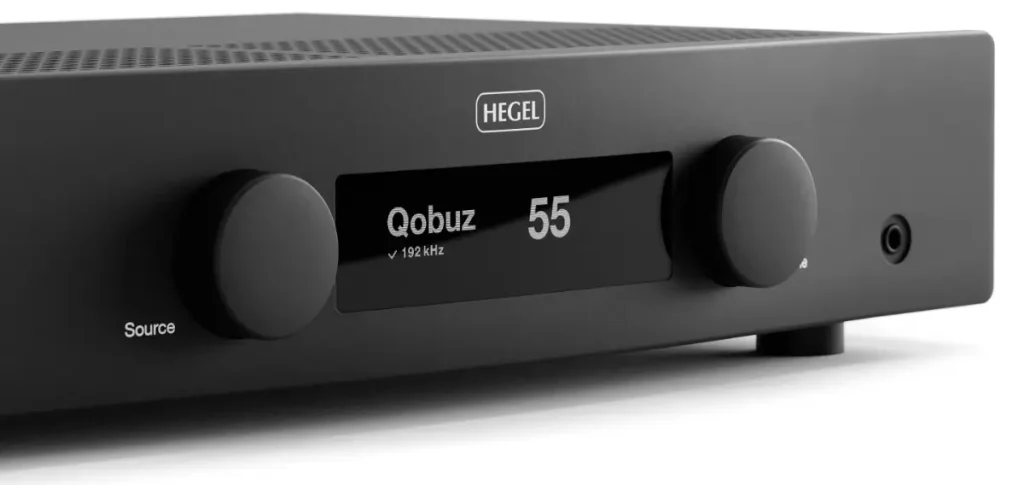
Hegel H150
Take the H95’s footprint, add 15 watts, a phono stage, and a newer digital front end shared with the amplifiers further up the range, and you get the H150. It’s the amplifier Hegel built to prove that “entry-level” and “cut corners” aren’t the same thing – the streaming platform and DAC architecture here are closer to what you’ll find in the H400 than in the H95 sitting next to it on this page. It’s also the first model in the range to include DAC loop, giving you a route to a separate external DAC later without needing a new amplifier. Worth the step up if you want a turntable connected without a separate phono stage, or if 60 watts feels like it’s leaving nothing spare for demanding speakers.
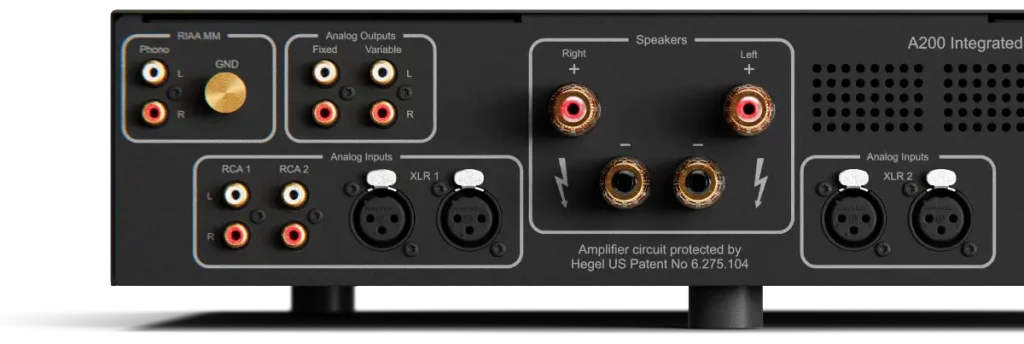
Hegel A200
The A200 is the range’s pure analogue amplifier – no streaming, no built-in DAC, and that’s entirely the point. If you already own a streamer, a DAC, or both, and don’t want to pay for a second one built into your amplifier, it gives you the same 150-watt platform as the H200 with an additional balanced input in place of the digital section. Moving magnet (MM) phono stage included, for anyone building an analogue-first system around a turntable and separates.
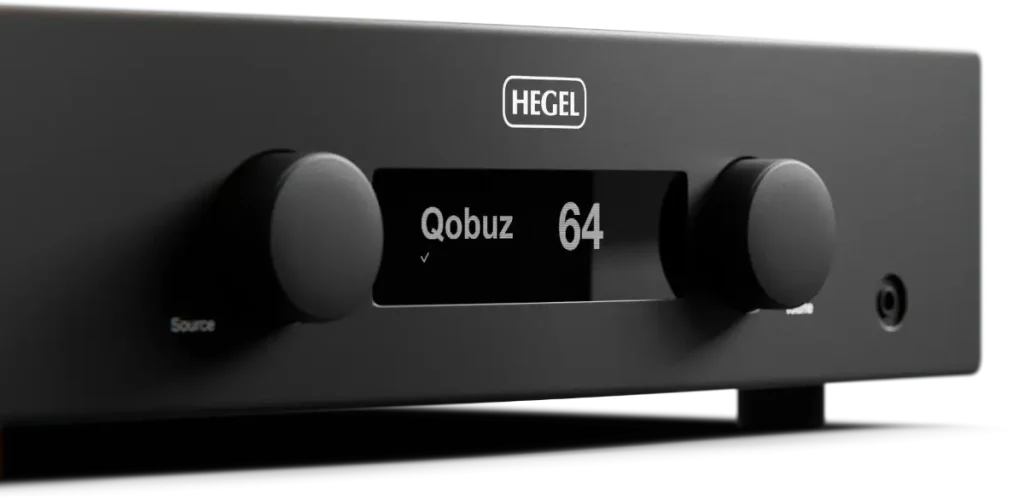
Hegel H200
The digital counterpart to the A200 – same 150-watt platform, same phono stage, same damping factor of 4,000, but with the full streaming platform, DAC, USB drive playback and DAC loop all built in. It’s arguably the most complete single box in the range: turntable, streaming service and USB drive all connected to one amplifier, with DAC loop keeping the door open to a separate DAC later if you ever want it. If you want one box to be the entire hub of your system, the H200 brings it all together without needing to step up to the H400.
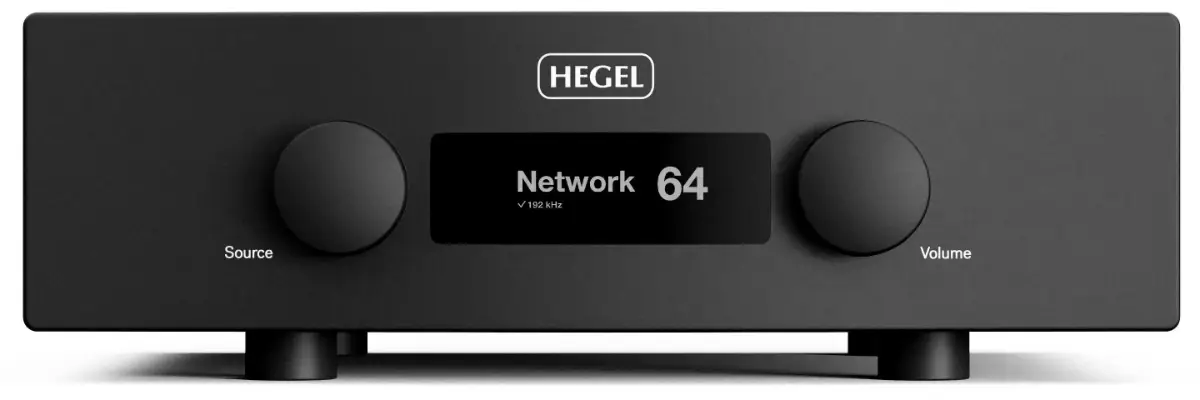
Hegel H400
Where the range moves from “does everything well” to “does everything brilliantly.” 250 watts, a dual-mono layout with separate power supplies per channel, and a bit-perfect DAC based on the H600’s, both built around the same ESS Sabre chipset. Streaming matches the H150 and H200 in full – see the full platform breakdown below. Two things worth knowing before you step up this far: there’s no phono stage and no headphone output at this level. Hegel’s own V10 phono stage is the natural pairing if vinyl is part of your system.
Hegel H600
Hegel’s reference integrated amplifier, built around the same volume attenuator used in their standalone P30A preamplifier. 303 watts, a damping factor of 4,000, full dual-mono construction, Hegel’s latest generation streaming platform and top-performing DAC – this is the amplifier for a system where nothing further up the chain, and nothing at the speaker end, is being asked to compromise. As with the H400, there’s no phono stage or headphone output here – the H600 is built purely as the heart of a system, not a one-box solution. If vinyl is in the picture, Hegel’s V10 phono stage is the obvious companion.
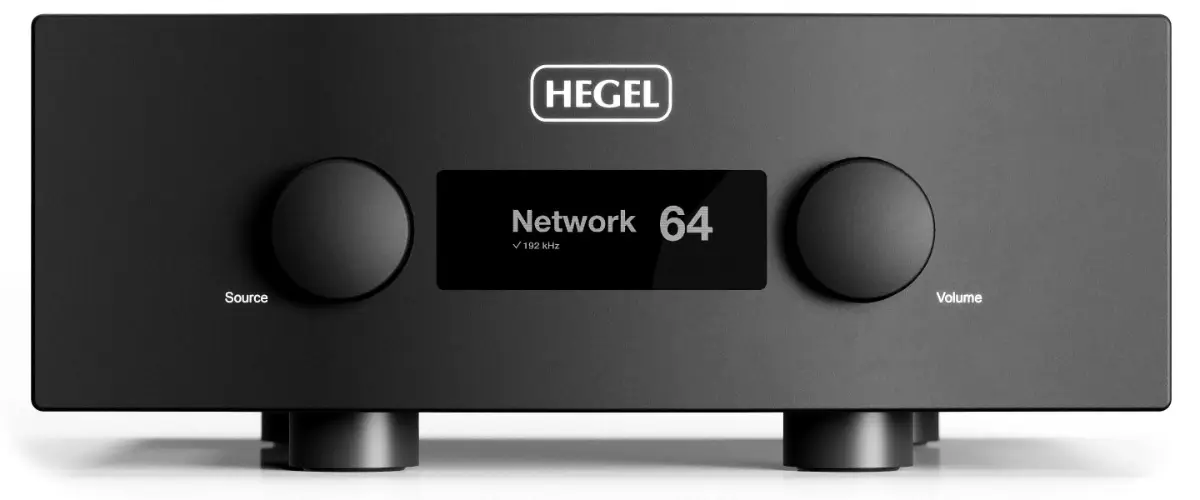
Comparing Hegel integrated amplifiers
Not sure which Hegel amplifier is right for you? The table below covers all six current models across amplifier specifications, inputs, outputs, streaming features and physical dimensions. Click any model to view full details and pricing.

|

|
|
|

|

|
|
|---|---|---|---|---|---|---|
| Amplifier | ||||||
| Power output | 60 W | 75 W | 150 W | 150 W | 250 W | 303 W |
| THD | < 0.01% | < 0.01% | < 0.01% | < 0.01% | < 0.005% | < 0.005% |
| Signal-to-noise ratio | > 100 dB | > 100 dB | > 100 dB | > 100 dB | > 100 dB | > 100 dB |
| Damping factor | > 2,000 | > 2,000 | > 4,000 | > 4,000 | > 4,000 | > 4,000 |
| Topology | Class AB | Class AB | Class AB | Class AB | Class AB (dual mono) | Class AB (dual mono) |
| Analogue Inputs | ||||||
| Line inputs | 2 x RCA | 1 x RCA | 2 x RCA | 2 x RCA | 2 x RCA | 2 x RCA |
| Balanced inputs | — | 1 x XLR | 2 x XLR | 1 x XLR | 1 x XLR | 2 x XLR |
| MM phono input | — | 1 x RCA | 1 x RCA | 1 x RCA | — | — |
| Digital Inputs | ||||||
| Coaxial | 1 x RCA | 1 x RCA | — | 1 x RCA | 1 x RCA, 1 x BNC | 1 x RCA, 1 x BNC |
| Coaxial max resolution | 24-bit / 192 kHz | 24-bit / 192 kHz | — | 24-bit / 192 kHz | 24-bit / 192 kHz | 24-bit / 192 kHz |
| Toslink optical | 3 x Toslink | 2 x Toslink | — | 2 x Toslink | 3 x Toslink | 3 x Toslink |
| Toslink max resolution | 24-bit / 96 kHz | 24-bit / 96 kHz | — | 24-bit / 96 kHz | 24-bit / 96 kHz | 24-bit / 96 kHz |
| USB-A (storage) | — | 1 x USB-A | — | 1 x USB-A | — | — |
| USB-B (computer audio) | 1 x USB-B | 1 x USB-B | — | 1 x USB-B | 1 x USB-B | 1 x USB-B |
| USB-B max resolution | 24-bit / 96 kHz | 24-bit / 192 kHz | — | 24-bit / 192 kHz | 32-bit / 384 kHz, DSD256 | 32-bit / 384 kHz, DSD256 |
| Network max resolution | 24-bit / 192 kHz | 24-bit / 192 kHz | — | 24-bit / 192 kHz | 24-bit / 192 kHz | 24-bit / 192 kHz |
| MQA decoding | — | — | — | — | ✓ | ✓ |
| Outputs | ||||||
| Speaker terminals | 1 pair | 1 pair | 1 pair | 1 pair | 1 pair | 1 pair (premium) |
| Pre-out | 1 x RCA | 1 x RCA | 1 x RCA | 1 x RCA | 1 x RCA | 1 x RCA |
| Fixed line out | — | — | 1 x RCA | 1 x RCA | 1 x RCA | 1 x RCA |
| Headphone output | 1 x 6.35 mm | 1 x 6.35 mm | 1 x 6.35 mm | 1 x 6.35 mm | — | — |
| DAC loop | — | ✓ | — | ✓ | ✓ | ✓ |
| Streaming | ||||||
| Apple AirPlay | ✓ | ✓ | — | ✓ | ✓ | ✓ |
| Spotify Connect | ✓ | ✓ (lossless) | — | ✓ (lossless) | ✓ (lossless) | ✓ (lossless) |
| TIDAL Connect | — | ✓ | — | ✓ | ✓ | ✓ |
| Qobuz Connect | — | ✓ | — | ✓ | ✓ | ✓ |
| Chromecast / Google Cast | — | ✓ | — | ✓ | ✓ | ✓ |
| DLNA / UPnP | ✓ | ✓ | — | ✓ | ✓ | ✓ |
| Roon Ready | — | ✓ | — | ✓ | ✓ | ✓ |
| Multi-room audio | — | ✓ | — | ✓ | ✓ | ✓ |
| Usability | ||||||
| Hegel Control app | — | ✓ | — | ✓ | ✓ | ✓ |
| IR remote included | ✓ | ✓ | ✓ | ✓ | ✓ | ✓ |
| Front-panel display | OLED | OLED | OLED | OLED | OLED | OLED |
| Physical | ||||||
| Dimensions (W × H × D) | 430 × 100 × 350 mm | 430 × 100 × 350 mm | 430 × 120 × 410 mm | 430 × 120 × 410 mm | 430 × 150 × 440 mm | 430 × 171 × 445 mm |
| Weight | 8.0 kg | 9.7 kg | 13.5 kg | 13.6 kg | 20 kg | 22 kg |
| Finish | ||||||
| View H95 | View H150 | View A200 | View H200 | View H400 | View H600 |
Shared technology & features
SoundEngine 2
Every Hegel integrated amplifier uses SoundEngine 2, Hegel’s own approach to keeping distortion under control. It works a little like noise-cancelling headphones – the circuit continuously measures noise and distortion in the amplifier’s output, then cancels it out in real time, before it can affect the sound. The result is an amplifier that stays composed and detailed as you turn the volume up, rather than hardening or losing timing the way many amplifiers do under load.
High damping factor
Every Hegel integrated amplifier has a damping factor well above what’s typical at its price point – over 2,000, and over 4,000 on some models in the range. In practice, this is about control: a high damping factor means the amplifier can stop a speaker cone as precisely as it starts it, which shows up as tighter, better-defined bass and a more controlled low end, particularly noticeable with speakers that aren’t the easiest load to drive.
Built-in DAC
Most models in the range have a DAC built in, so digital sources sound their best without needing a separate box. The A200 is the exception by design – built for anyone who already owns a DAC, or a streamer with one built in, and would rather not pay for a second.
Streaming platform
Most Hegel integrated amplifiers include the full streaming platform – AirPlay, Google Cast, Roon Ready, Tidal Connect, Qobuz Connect, Spotify Connect and UPnP, all built in. The H95 covers the essentials instead – AirPlay, UPnP and Spotify Connect – and the A200 has no streaming at all, being a purely analogue amplifier.
DAC loop
DAC loop is Hegel’s answer to future-proofing your system. A selected digital input is routed straight out to a separate digital output instead of the amplifier’s own internal DAC, so you can feed it into an external DAC of your choosing, with its analogue output returned to the amplifier via the balanced XLR input. Buy into the range now, add a separate DAC later, without needing a new amplifier. Hegel’s own D50 is a natural pairing if you want to take this route.
Hegel Control app
All models except the H95 and A200 can be controlled from Hegel’s own app – volume, input switching and streaming, from a phone rather than the included remote. Available for iOS and Android, the app also gives access to podcasts and internet radio.
Hegel integrated amplifiers at home
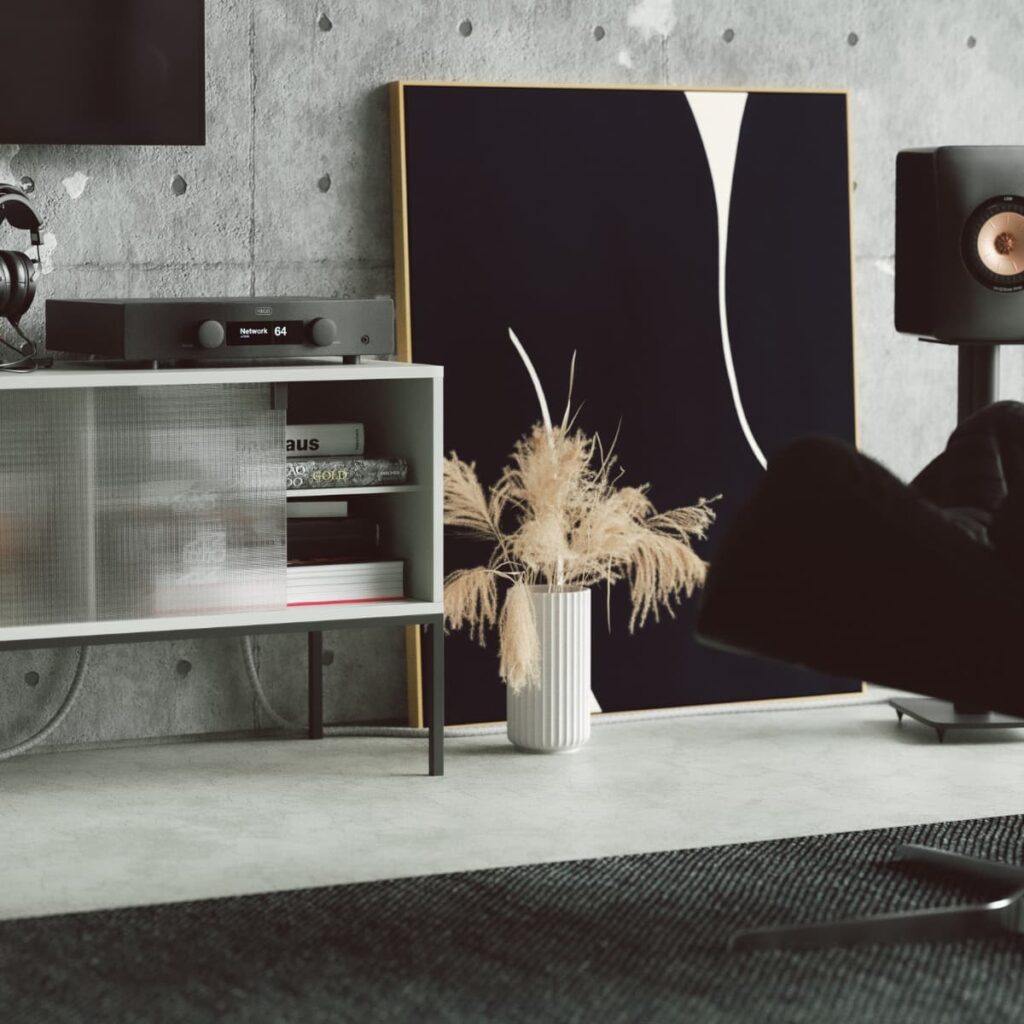
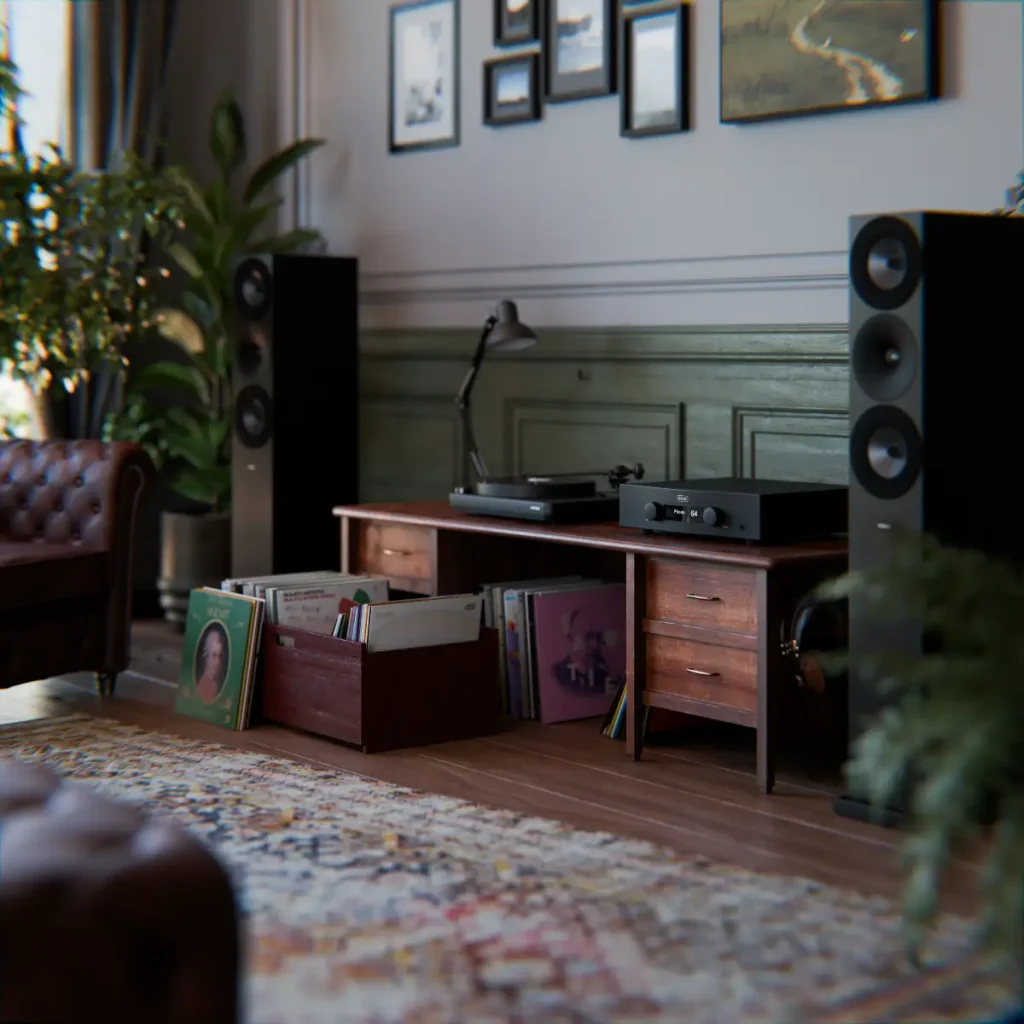
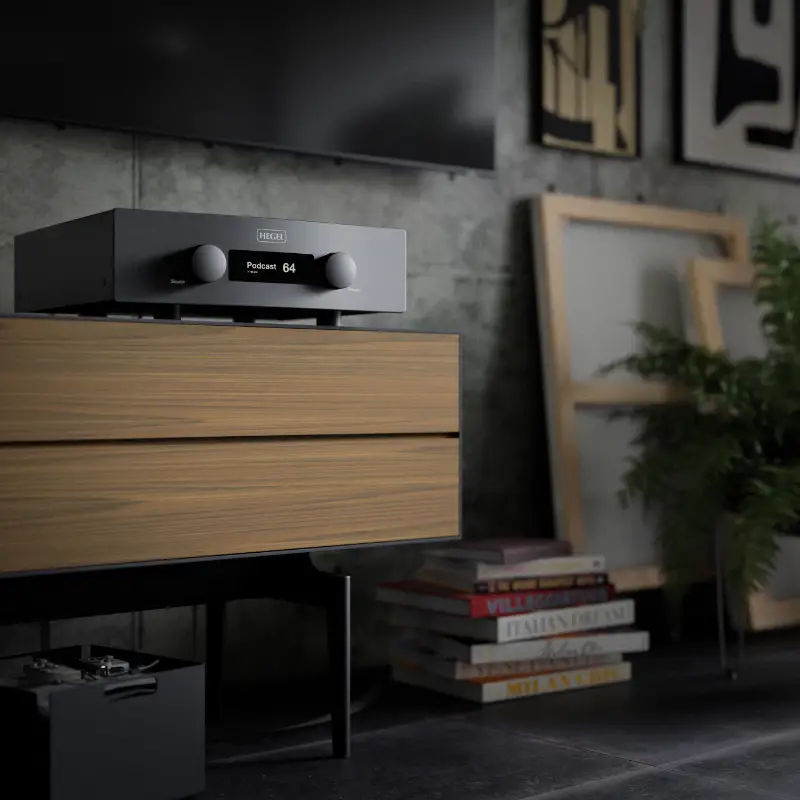
Every Hegel integrated amplifier is designed to disappear into your listening room, not dominate it. Here’s how the range looks at home, from the compact H95 to the reference H600.