
miniDSP Flex 2 In / 4 Out Audio Processor
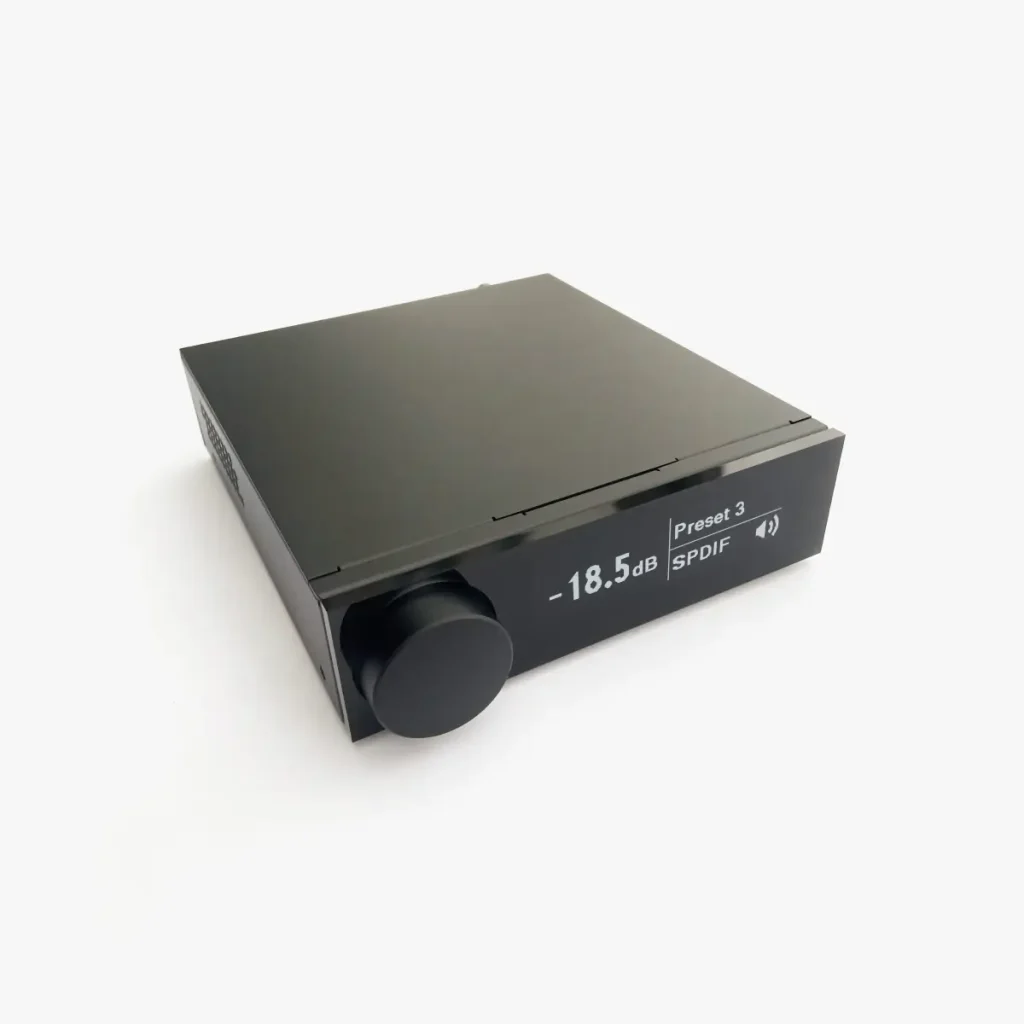
The miniDSP Flex 2 in / 4 out audio processor is a compact and highly flexible DSP platform designed for modern stereo systems. It allows precise control over subwoofer integration, active crossovers, equalisation and system optimisation, and is available in Flex RCA, Flex Balanced and Flex Digital versions. Dirac Live room correction is optional.
Usually dispatched in 1-2 days. Delivery & returns
Price range: £629.00 through £679.00
including delivery and VAT
Have a question? Call us on 0161 399 0993 or contact us. We also offer part exchange and price matching.




About the miniDSP Flex
The miniDSP Flex 2 in / 4 out audio processor is a compact digital signal processor (DSP) platform designed for subwoofer integration, active crossovers and system optimisation in stereo systems. It is available in three versions with unbalanced analogue (RCA), balanced analogue (TRS) or digital (optical and coaxial) outputs. Each version uses the same DSP processing platform and software, but offers different connectivity to suit different systems.
What the Flex does
Flex gives you precise control over how your speakers and subwoofers behave in your room. You can implement crossovers, adjust levels, apply parametric EQ, add delay for time alignment and route signals flexibly using the built-in matrix mixer. This makes it suitable for straightforward two-channel systems with one or two subwoofers, as well as more ambitious active crossover setups.
Digital connectivity
All versions of the miniDSP Flex include USB, coaxial, optical and Bluetooth digital inputs. The USB interface also supports bi-directional audio, allowing audio to be sent from the Flex back to a macOS or Windows computer. This can be used for recording and archiving audio, and it can also be useful during system setup when working with measurement and analysis software.
Three versions: RCA, Balanced and Digital
Flex is available in three versions. They share the same DSP capabilities and digital inputs, but differ in their other input and output options.
Flex RCA
Flex RCA is designed for conventional hi-fi systems using standard RCA connections. It provides two analogue RCA inputs and four analogue RCA outputs, making it a natural fit for systems where you want to integrate one or more subwoofers, implement an active crossover, or apply DSP-based optimisation while keeping the rest of the system simple and familiar.
Flex Balanced
Flex Balanced uses balanced TRS inputs and outputs. Balanced connections offer improved noise rejection and are particularly useful with balanced DACs, studio equipment, active monitors, or longer cable runs where signal integrity matters. If the rest of your system is built around balanced interconnects, Flex Balanced is usually the most straightforward choice.
Flex Digital
Flex Digital is designed for systems that already include an external DAC. It provides analogue inputs but uses digital outputs, allowing the Flex to perform DSP processing while leaving digital-to-analogue conversion to a separate component. This is a good option if you want the flexibility of the Flex platform but prefer the sonic character or connectivity of your own DAC.
Need more than four output channels?
If you need more than four output channels, and you can manage without analogue inputs, have a look at the miniDSP Flex Eight model. This is our go-to option for multi-sub optimisation using three or more subwoofers.
Need more analogue inputs or a phono stage?
If you need more analogue inputs, consider stepping up to the miniDSP SHD or combining your Flex processor with a miniDSP ADept analogue-to-digital converter. Both offer RCA and XLR inputs. ADept connects to your Flex via optical or coaxial. It also has a built-in MM/MC phono stage, providing a clean and simple option for connecting a turntable.
Dirac Live room correction (optional)
Dirac Live room correction is available as an optional upgrade for the miniDSP Flex platform. Dirac analyses how your speakers interact with your room and creates correction filters that address both frequency response and timing, helping to reduce unwanted colouration, tighten bass and improve clarity and imaging.
Dirac Live can be added at the time of purchase or activated later via a software licence through the miniDSP Device Console companion software. Once licensed, you measure your system using a measurement microphone, generate correction filters, and load them into the Flex.
KD-1 controller (optional)
miniDSP offers the KD-1 smart remote control as an optional hardware controller for the Flex platform. It provides convenient day-to-day control of volume, input selection, preset selection and Dirac on/off, with clear visual feedback via its built-in display, without needing to use the front panel controls or IR remote.
Measurement microphones
If you are planning to use Flex for room correction or subwoofer integration, accurate acoustic measurements are essential. You will need a measurement microphone, a Mac or PC, and measurement software such as Dirac Live or Room EQ Wizard.
Features
- High-precision DSP engine with 32-bit floating-point processing
- 2 input / 4 output architecture for sub integration and active crossover setups
- Matrix mixer for flexible routing and summing options
- Parametric EQ, crossover filters, delay and time alignment
- USB, coaxial, optical and Bluetooth digital inputs
- Optional Dirac Live room correction support
- Compact chassis and straightforward configuration software
Specifications
| Unbalanced RCA | Balanced TRS | Digital | |
| DSP Engine | Analog Devices SHARC ADSP21489 @ 400MHz | Analog Devices SHARC ADSP21489 @ 400MHz | Analog Devices SHARC ADSP21489 @ 400MHz |
| Processing / Sample Rate | 32-bit/96kHz (32-bit/48kHz with Dirac Live) | 32-bit/96kHz (32-bit/48kHz with Dirac Live) | 32-bit/96kHz (32-bit/48kHz with Dirac Live) |
| USB Audio Support | UAC2 Bidirectional, ASIO (Windows), Plug&Play (Mac/Linux) | UAC2 Bidirectional, ASIO (Windows), Plug&Play (Mac/Linux) | UAC2 Bidirectional, ASIO (Windows), Plug&Play (Mac/Linux) |
| I/O Configuration | 2 in / 4 out | 2 in / 4 out | 2 in / 4 out |
| Digital Input Connectivity | SPDIF (RCA), Optical (Toslink), USB audio (stereo), Bluetooth (LDAC/aptX HD/aptX/AAC/SBC), 20–216kHz | SPDIF (RCA), Optical (Toslink), USB audio (stereo), Bluetooth (LDAC/aptX HD/aptX/AAC/SBC), 20–216kHz | SPDIF (RCA), Optical (Toslink), USB audio (stereo), Bluetooth (LDAC/aptX HD/aptX/AAC/SBC), 20–216kHz |
| Digital Output Connectivity | 4x outputs (post-DSP) on USB Audio | 4x outputs (post-DSP) on USB Audio | 4x outputs (post-DSP) on USB Audio, SPDIF & Toslink |
| Analogue Input Connectivity | 2x unbalanced RCA | 2x balanced 6.35mm TRS (as XLR) | 2x unbalanced RCA |
| Analogue Output Connectivity | 4x unbalanced RCA | 4x balanced 6.35mm TRS (as XLR) | N/A |
| Analogue Input Impedance | 100 kΩ | 200 kΩ | 100 kΩ |
| Analogue Output Impedance | 200 Ω | 200 Ω | N/A |
| Analogue I/O Max Levels | 2V RMS / 2V RMS | 4V RMS / 4V RMS | 2V RMS / N/A |
| Frequency Response | 20Hz–20kHz ±0.1dB | 20Hz–20kHz ±0.1dB | 20Hz–20kHz ±0.01dB |
| SNR (Digital to Analogue) | 120 dB(A) | 121 dB(A) | D>D: 137 dB(A) |
| THD+N (Digital to Analogue) | -110dB (0.0003%) ±3dB | -112dB (0.00025%) ±3dB | D>D: -130dB (0.00003%) |
| Crosstalk (Digital to Analogue) | -120 dB | -128 dB | D>D: -165 dB |
| SNR (Analogue to Analogue) | 115 dB(A) | 116 dB(A) | A>D: 115 dB(A) |
| THD+N (Analogue to Analog) | -106dB (0.0005%) ±3dB | -108dB (0.0004%) ±3dB | A>D: -108dB (0.0004%) |
| Crosstalk (Analog to Analogue) | -115 dB | -123 dB | A>D: -115 dB |
| Filtering Technology | FIR + IIR, upgradable to Dirac Live 3.x (20–20kHz) | FIR + IIR, upgradable to Dirac Live 3.x (20–20kHz) | FIR + IIR, upgradable to Dirac Live 3.x (20–20kHz) |
| DSP Presets | Up to 4 | Up to 4 | Up to 4 |
| Dimensions | 150 × 180 × 41 mm | 150 × 180 × 41 mm | 150 × 180 × 41 mm |
| Accessories | IR remote | IR remote | IR remote |
| Power Supply | External switching PSU, 12V/1.6A (US/UK/EU/AU) | External switching PSU, 12V/1.6A (US/UK/EU/AU) | External switching PSU, 12V/1.6A (US/UK/EU/AU) |
| Power Consumption | 9.0W idle / 2.5W standby | 10.3W idle / 3.1W standby | 7.5W idle / 2.5W standby |
Frequently asked questions
Which Flex version should I choose?
Choose Flex RCA for conventional hi-fi systems using RCA connections. Choose Flex Balanced if your system uses balanced connections or studio equipment. Choose Flex Digital if you want to use an external DAC.
Does the Flex include Dirac Live room correction?
Dirac Live is optional on Flex models and requires a software licence. Dirac Live can be activated by purchasing a licence through the miniDSP Device Console software.
Can I integrate subwoofers with Flex?
Yes. Flex is commonly used for subwoofer integration. You can implement high-pass and low-pass filters, adjust delay for time and phase alignment, and apply EQ to achieve the tightest possible integration between speakers and subs.
What if I have more than two subwoofers?
You can use the Flex’s 4 output channels however you like, so a single Flex can manage up to 4 subwoofers, but only if you do not also want to apply high-pass or room-correction filters to your main speakers. If you want to apply filters to both your speakers and subwoofers, and you have more than 2 subwoofers, the Flex Eight is the better choice.
Can Flex be used for active crossovers?
Yes. Flex can be configured to implement active crossovers and is suitable for two-way active setups, or for more advanced configurations depending on your requirements. If you need more output channels for complex active loudspeaker systems, consider the Flex Eight or Flex HT models.
Does the miniDSP Flex support the KD-1 controller?
Yes. the KD-1 smart controller is compatible with all miniDSP Flex and SHD models. It provides convenient control of volume, input selection, preset selection and Dirac on/off, with visual feedback via its built-in display.
Do I need Dirac Live for room correction?
No, Dirac Live is optional. You can apply very effective room correction using the parametric EQ filters included as standard. You can use free Room EQ Wizard (REW) software to take measurements and design filters. REW can export these filters in a format which can easily be imported by miniDSP’s Device Console software.
What do I need to use Dirac Live?
You need an audio processor that can run Dirac Live filters, a Mac or Windows computer to run the Dirac Live measurement software, and a calibrated measurement microphone.
Can I add Dirac Live later?
Yes. Dirac Live can be enabled later by purchasing and activating a licence via the miniDSP Device Console software.
What is AutoEQ?
AutoEQ provides a simplified measurement and filter design tool for users who may not wish to learn the full feature set of Room EQ Wizard (REW). AutoEQ uses REW in the background, so the measurements and filters are of the same high quality, but it hides a lot of the complexity for the most common tasks.